In Los Angeles, a city where lifestyle, innovation, and sport intersect, a new facility is quietly redefining the recreational landscape. The Los Angeles Padel Club (LAPC) is more than just a sports venue – it’s an ambitious, strategically planned hub for community, competition, and the future of a fast-growing sport.
Founded by entrepreneur and real estate fund manager Steve Shpilsky, LAPC is poised to become the city’s first permanent, top-tier padel facility. With seven courts – including tournament-grade surfaces styled in homage to Wimbledon – and a suite of amenities that blend social and professional life, the club is staking its claim as LA’s flagship destination for padel. Supporting this vision is a leadership team that includes partner Christ Ishoo, owner of LA BEAT of the Pro Padel League, and Jennifer Shpilsky, Chief Branding & Hospitality Officer.
A Strategic Response to a Growing Demand
Shpilsky’s entry into the sport began with a personal shift from tennis to padel, where he found a more dynamic, social, and accessible form of play. That discovery led to a larger realization: while the appetite for padel was growing rapidly in the U.S., especially in cities like Los Angeles, the infrastructure to support it had been lagging behind.
LAPC was conceived as a practical and scalable response to that infrastructural gap, with its location in Culver City reflecting more than convenience – it’s a strategic choice, placing the club close to tech and media giants like Apple, Sony, and Amazon Studios, for whom employees will seek an accessible viable leisure hub.
Shpilsky’s business professional background – managing over $750 million in hotel real estate development projects – has helped to shaped the club’s foundation. LAPC’ s commercial model emphasizes sustainability and scale. Every detail, from the court layout to the club’s tiered membership structure, is designed to ensure that LAPC could will grow with the sport rather than simply facilitate it.
More Than Courts: Building a Padel Ecosystem
At the heart of LAPC’s mission is the creation of a fully integrated padel community. The club’s programming is designed to cater to a wide range of players, from racquet-sport beginners to competitive club athletes. Structured leagues, skill-tiered play, and regular masterclasses form the competitive spine of the club’s offering.
Recognizing a significant shortage in coaching depth across the U.S. padel scene, LAPC is also investing in development – working to attract high-quality instructors and potentially partnering with professional organizations. The goal is not just to provide access to courts, but to create an environment where skills, confidence, and community grow together.
The participation of women is a key part of that equation. A core aspect to the club’s founding vision is the provision of women-specific programs alongside co-ed leagues and family-focused sessions. This pillar reflects Shpilsky’s ambition to create a club that is inclusive and reflective of the city’s diverse sporting interests.
In addition, LAPC includes co-working areas and social spaces – making it more than a place to play. It’s a location where fitness, lifestyle, and business can intersect, and symbolic of the growing trend of “third spaces” – areas that blend recreation and productivity – that has characterized post-remote work culture.
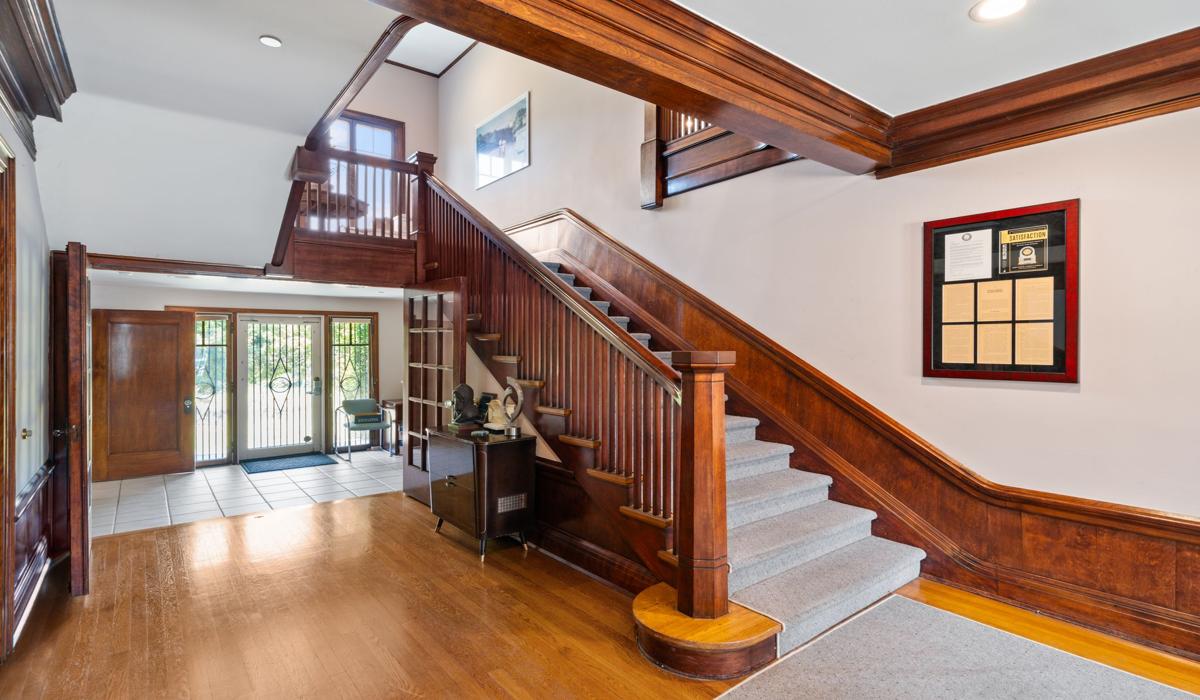 Existing staircase as part of the club’s original interior layout, which will be subject to re-modelling.
Positioning for the Future of Padel
LAPC is not entering the market as a novelty – it’s positioning itself as a cornerstone. The club’s partnership with professional padel team LA BEAT signals a growing commitment to the sport’s competitive side, and its scale already makes it the largest padel facility in the city. But beyond physical size, the club’s long-term success will depend on how it navigates the sport’s evolution in America.
Currently, Shpilsky sees padel as operating in a niche moment that presents both opportunity and risk. While the sport’s momentum is undeniable – with rising interest from junior athletes, former tennis players, and university organizations – the infrastructure and cultural awareness are still developing. By establishing LAPC early and embedding it deeply into the city’s sports and lifestyle circuits, the goal is to claim that first-mover advantage. The short-term vision is not rapid expansion, but consolidation: to make LAPC synonymous with padel in Los Angeles before replicating the model elsewhere.
Over the next decade, the benchmark of success will be clear. If LAPC becomes the place where families gather on weekends, professionals unwind after work, and rising athletes take their first steps into the sport, then the club will have fulfilled its mission – not just to provide courts, but to help define a culture.